
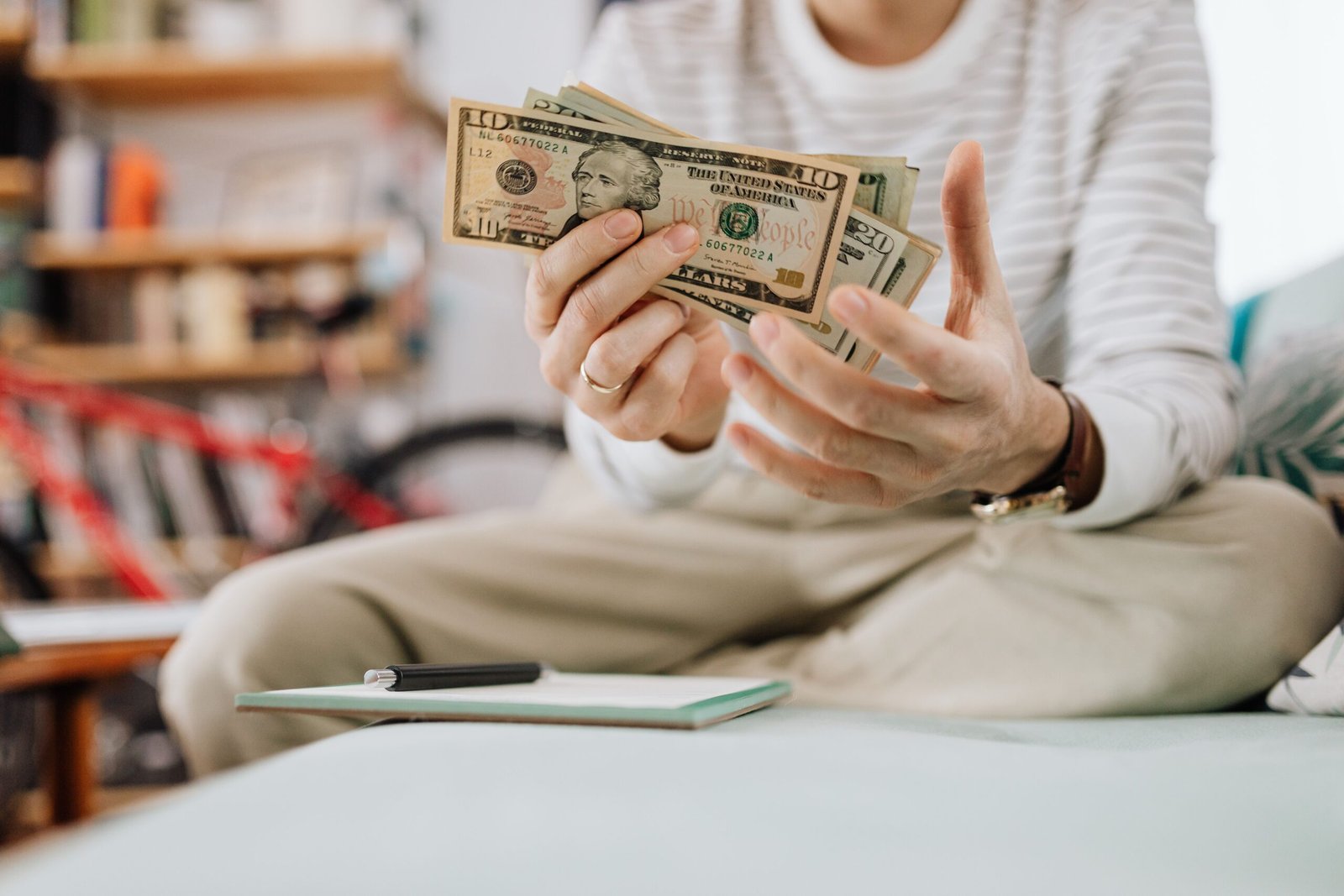
Ninety days ago, I decided to do something I’d been avoiding for years: write down every single dollar I spent, no exceptions, no rounding, no “I’ll remember that one later.” Not a budgeting app quietly categorizing things in the background. Every purchase, logged by hand, the same day it happened.
I expected the experience to be tedious. I did not expect it to change how I think about money entirely. Here’s what actually happened, month by month, and what stuck once the 90 days were over.
Why I Did This in the First Place
I wasn’t in financial trouble. That’s actually part of why I wanted to try this. I had a decent income, no major debt crisis, and a vague sense that my money was “fine.” But every month, my savings account looked about the same as it had the month before, and I couldn’t tell you where the difference had gone. Not overspending exactly, just quietly disappearing.
I’d tried budgeting apps before. They worked for about two weeks each time before I stopped checking them. I suspected the problem wasn’t the tool. It was the distance between spending and noticing. An app that auto-categorizes your coffee purchase means you never actually have to look at the coffee purchase. So I decided to remove that distance completely and log everything manually.
Month One: The Shock Phase
The first two weeks were genuinely uncomfortable. Not because I was spending recklessly, but because I had no idea how many small transactions added up during a normal week. Writing “$6.75, coffee” felt silly the first time. By the tenth time that week, it stopped feeling silly and started feeling like data.
The biggest surprise in month one wasn’t a single big expense. It was the accumulation of small, forgettable ones. Delivery fees. A subscription I’d forgotten I was still paying for. A “quick stop” at the store that somehow became $40 every time, despite feeling like I only grabbed a couple of things.
By the end of the first month, I had a number I wasn’t expecting: I’d spent almost 20% more on food than I would have guessed if you’d asked me to estimate it from memory. Not because I was buying anything extravagant, just because the frequency of small purchases was higher than my mental model of my own spending.
Month Two: The Pattern Recognition Phase
Once the initial shock wore off, something more useful started happening. Patterns became visible in a way they never had before.
I noticed that my spending spiked predictably on specific days. Certain evenings after work were reliably expensive, not because of anything planned, but because I was tired, and decision fatigue made ordering food or buying something online feel easier than making dinner or resisting a sale email.
I also noticed a category I’d never separated out before: spending that was really about avoiding a feeling rather than meeting a need. A stressful day at work often led to a purchase within a few hours, usually something small, usually something I didn’t think about again. Individually these felt harmless. Tracked over weeks, they formed a clear and slightly uncomfortable pattern.
This is the part that a budgeting app would likely have missed entirely, because it only sees the transaction, not the context around it. Writing things down by hand, in the moment, made me pay attention to why I was spending, not just what I was spending on.
Month Three: The Adjustment Phase
By month three, tracking itself had become close to automatic. It took maybe two minutes a day, and the resistance I’d felt early on was mostly gone. But more importantly, my behavior had started shifting without me deliberately forcing it to.
Once you can see a pattern clearly, it’s hard to unsee it. Knowing that stressful days reliably led to spending meant I started noticing the moment before the purchase, not just after. Sometimes I still make the purchase. But sometimes I didn’t, simply because the pattern had become visible enough to interrupt.
I also started asking a simple question before non-essential purchases: would I have logged this the same way a week ago without thinking twice, or am I only comfortable with it because no one, including me, was really watching? That single question did more to change my spending than any percentage-based budget rule ever had.
What the Numbers Actually Showed
Across the full 90 days, a few things stood out clearly once I looked at the totals side by side.
Small, frequent purchases outweighed occasional big ones. The handful of larger purchases I made during the 90 days were things I’d planned and felt fine about. The damage, such as it was, came almost entirely from repeated small transactions that individually felt too minor to matter.
My spending was more emotionally driven than I would have guessed. Roughly a third of my “wants” spending clustered around a small number of stressful or low-energy days, rather than being spread evenly across the season.
Subscriptions were quietly expensive. I found three recurring charges I’d genuinely forgotten about. None of them were large individually, but together they were costing more per month than a full week of groceries.
My estimate of my own spending was consistently too optimistic. Before starting this, if you’d asked me to guess my monthly discretionary spending, I would have guessed low. Every single month, the real number came in higher than my mental estimate, sometimes by a wide margin.
What I Changed Going Forward
I didn’t keep hand-logging every purchase forever. That level of manual tracking is useful as a diagnostic tool, not necessarily as a permanent lifestyle. But a few things from the experiment stuck.
I cancelled the subscriptions I’d forgotten about, which alone recovered a meaningful chunk of money every month without any change in my day-to-day life.
I built in a short pause before non-essential purchases on stressful days specifically, since that was the pattern most clearly tied to spending I later regretted.
I switched to checking my spending weekly instead of monthly, since monthly reviews had been too infrequent to catch patterns while they were still happening.
I stopped trusting my own gut estimate of what I spend. Ninety days of data taught me that my instinct consistently underestimated reality, so now I check the actual numbers instead of assuming I already know them.
Was It Worth It?
Yes, though not for the reason I expected going in. I thought this experiment would mostly be about cutting spending. It ended up being more about accuracy. I wasn’t spending recklessly before; I was just spending on autopilot, with a mental picture of my habits that didn’t match reality.
The most useful outcome wasn’t a specific dollar amount saved, though there was real savings involved. It was simply having an accurate picture instead of a guessed one. Most financial advice assumes you already know where your money goes. Ninety days of manual tracking taught me that assumption is often wrong, even for people who consider themselves reasonably financially aware.
If You Want to Try This Yourself
You don’t need 90 days to get value out of this. Even two consistent weeks of writing down every purchase, by hand, in the moment, will surface patterns that an app’s auto-categorized summary tends to smooth over. The friction of manually logging something is part of what makes it work. It forces a moment of attention that automated tracking is specifically designed to remove.
Start simple. A notes app, a small notebook, anything that takes seconds to update. Log the amount, the category, and one honest word about why you made the purchase. Skip nothing, including the small stuff, since the small stuff turned out to be where most of the useful information was hiding.
You’re not trying to shame yourself into different behavior. You’re trying to see clearly enough that better decisions start happening on their own, the same way mine did once the patterns became impossible to ignore.