
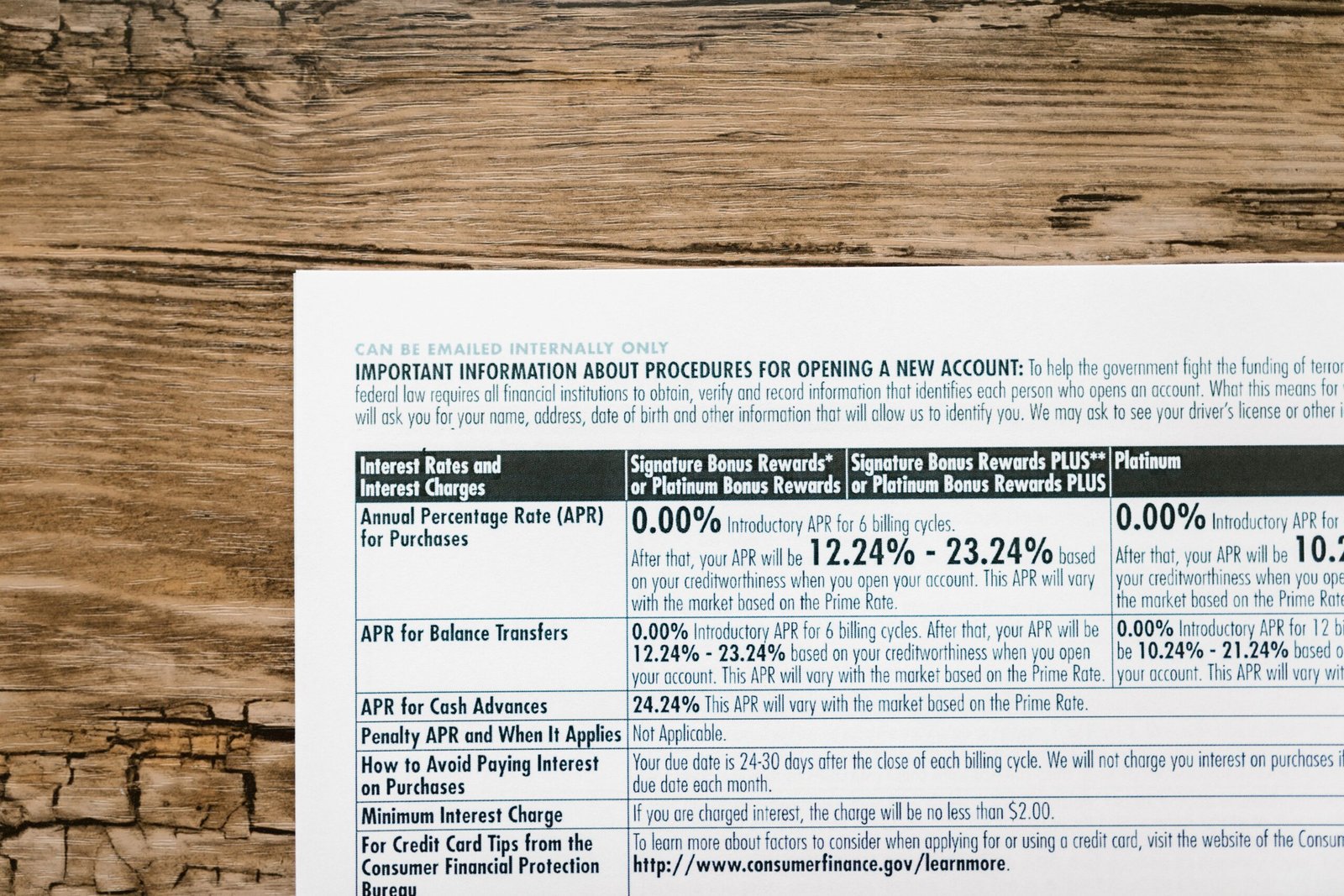
Credit Card Debt at 24% APR: A Realistic Payoff Timeline
Twenty-four percent APR sounds like a number you can mentally file away and deal with later. It doesn’t sound urgent the way “you owe $8,000” sounds urgent. But 24% compounding monthly on a revolving balance is one of the most quietly destructive numbers in personal finance, precisely because it doesn’t feel dramatic in the moment. It just sits there, working against you every single month, whether you’re paying attention to it or not.
Most articles about credit card debt either scare you with a worst-case number or hand you a generic “pay more than the minimum” tip and move on. Neither actually answers the question most people want answered: given my actual balance and what I can actually afford to pay each month, how long is this really going to take? Let’s do that math properly.
Why 24% APR Is Worse Than It Sounds
A 24% annual rate translates to roughly 2% interest charged on your balance every single month, compounding on whatever you haven’t paid off. That 2% doesn’t sound like much on its own, but it’s applied to your full remaining balance every month, including the interest that got added the month before. Left unchecked, interest generates more interest, which is exactly what compounding means, and it’s why credit card debt can grow even while you’re making payments, if those payments are too small.
This is the detail that a lot of debt advice skips over: the minimum payment printed on your statement is often calculated as a small percentage of your balance, frequently somewhere around 1 to 3%, plus that month’s interest. Because it’s a percentage of a shrinking balance rather than a fixed dollar amount, minimum payments shrink along with your balance. That sounds like a feature. In practice, it’s the mechanism that makes minimum-payment-only debt take decades to clear.
The Minimum Payment Trap, With Real Numbers
Here’s what that actually looks like on a $5,000 balance at 24% APR, assuming a fairly typical minimum payment formula of about 1% of the balance plus that month’s interest, which works out to roughly 3% of the balance each month.
In the first month, interest alone is $100. The minimum payment comes out to about $150, meaning only $50 actually reduces your principal. The next month, the balance is slightly lower, so both the interest and the minimum payment shrink slightly too. This pattern repeats every month, with the amount going toward your actual balance staying frustratingly small in proportion to what you’re paying.
Run that pattern out and the balance declines by roughly 1% per month. Getting from $5,000 down to a genuinely small remaining balance under this pattern takes somewhere in the neighborhood of 35 to 40 years. Not months. Years, plural, in the double digits. Along the way, you’d pay several times the original balance in interest alone.
This isn’t a scare tactic. It’s just what the math does when a payment barely outpaces the interest it’s meant to cover. If you’ve ever felt like you’re “paying and paying” on a credit card without the balance seeming to move, this is almost certainly why.
What a Realistic Timeline Actually Looks Like
The good news is that moving off the minimum payment, even modestly, changes this picture dramatically. Because the math is compounding, small increases in your fixed monthly payment produce outsized improvements in your payoff timeline. Here’s what a $5,000 balance at 24% APR looks like with a few different fixed monthly payments, meaning the same dollar amount paid every month regardless of how the balance shrinks.
At $150 a month: roughly 55 months, a little over 4.5 years, with total interest paid around $3,300, meaning you’d pay back more than one and a half times the original balance.
At $200 a month: roughly 35 months, just under 3 years, with total interest around $2,000.
At $250 a month: roughly 26 months, a bit over 2 years, with total interest around $1,450.
At $300 a month: roughly 20 months, under 2 years, with total interest around $1,150.
At $400 a month: roughly 15 months, just over a year, with total interest around $800.
Notice the pattern. Going from $150 to $200 a month doesn’t just shave a few months off, it cuts the payoff time by roughly a third and cuts total interest by close to $1,300. Every additional fixed dollar you commit each month has an outsized effect, precisely because it shortens the window during which 24% is compounding against you.
Here’s the same exercise for a larger $10,000 balance, since a lot of people carrying credit card debt are dealing with something closer to this range or higher.
At $300 a month: roughly 55 months, about 4.5 years, with total interest around $6,600.
At $400 a month: roughly 35 months, just under 3 years, with total interest around $4,000.
At $500 a month: roughly 26 months, a bit over 2 years, with total interest around $2,900.
At $600 a month: roughly 20 months, under 2 years, with total interest around $2,300.
At $800 a month: roughly 15 months, just over a year, with total interest around $1,600.
The relationship holds regardless of balance size. What actually determines your timeline isn’t the total amount you owe in isolation, it’s the ratio between your balance and your fixed monthly payment. A $10,000 balance paid at $400 a month behaves almost identically, in terms of timeline and interest cost, to a $5,000 balance paid at $200 a month. That ratio is the number worth paying attention to, more than either figure on its own.
Why “Just Pay More” Isn’t Always Realistic Advice
It’s easy to look at those tables and think the answer is simply to pay more each month. For a lot of people, that advice isn’t actionable, not because they’re being careless with money, but because there genuinely isn’t extra room in a monthly budget to pull from. Telling someone to pay $400 instead of $150 doesn’t help if $400 isn’t available.
This is where a realistic payoff plan differs from a hopeful one. A realistic plan starts with an honest number: what can you actually commit to paying every month, consistently, without that plan collapsing after two or three months. A slightly longer payoff timeline that you can actually sustain will always beat an aggressive one that falls apart the first time an unexpected expense shows up.
If you’re choosing between a $200 monthly payment you can reliably make for the next three years and a $400 monthly payment you can only manage for two months before reality intervenes, the $200 plan is the better plan, even though it takes longer on paper. A payoff timeline only means something if you actually follow it through.
Three Ways to Improve the Timeline Without Increasing Your Payment
If increasing your fixed monthly payment isn’t realistic right now, there are still a few levers that can meaningfully shorten this timeline.
A balance transfer to a lower or 0% introductory rate. If you qualify for a card offering a 0% promotional rate for a set period, often 12 to 18 months, moving your balance there stops the 24% compounding entirely for that window, provided you can pay it down within the promotional period and avoid new charges. This is genuinely one of the more powerful tools available, though it typically requires decent credit to qualify, and usually comes with a transfer fee, often around 3 to 5% of the balance moved, which should be factored into your math before assuming it’s automatically the better option.
Any lump sum applied early rather than spread out. Because interest compounds on your current balance, a lump sum payment made early in the payoff timeline saves more in total interest than the same amount split into smaller payments spread across many months. A tax refund, a bonus, or savings you don’t urgently need elsewhere will do more good applied as a single early payment than the same dollars trickled in gradually.
Reducing the interest rate itself through a call to your card issuer. This gets skipped constantly, but it’s worth doing before assuming your rate is fixed. Card issuers sometimes agree to a temporary or permanent rate reduction, particularly for customers with a decent payment history, if you simply ask. It costs nothing to make the call, and even a few percentage points off your rate changes the math meaningfully over a multi-year payoff.
A Note on Multiple Cards
Everything above assumes a single balance, but a lot of people are managing more than one card at once, sometimes at different rates. If that’s your situation, the math doesn’t change conceptually, it just means the ratio between total balance and total available payment matters across all of your cards combined, not just one.
Whether you tackle multiple balances by targeting the highest rate first or the smallest balance first is really a separate question about which payoff method fits your temperament, since both approaches work if followed consistently. What matters for the purposes of this timeline exercise is simply that your full monthly debt payment, spread across however many cards you’re carrying, needs to meaningfully exceed the combined interest being generated each month, or the same minimum-payment trap applies across the whole set, not just one card.
What This Timeline Doesn’t Account For
A few honest caveats worth keeping in mind. These calculations assume a fixed payment amount every single month with no new charges added to the balance in the meantime. If you’re still using the card for new purchases while paying down the existing balance, your actual timeline will stretch out considerably beyond what these numbers suggest, since you’re adding to the very balance you’re trying to shrink.
They also assume your interest rate stays constant. Rates can and do change, sometimes due to a missed payment triggering a penalty rate, which is often considerably higher than your standard rate and can undo a lot of progress quickly. Staying current on payments isn’t just about avoiding late fees, it’s often what keeps your rate from jumping to something far worse than 24%.
The Bottom Line
Twenty-four percent APR is a genuinely difficult rate to make progress against with minimum payments alone, and the math bears that out clearly. A $5,000 or $10,000 balance paid at the minimum can realistically stretch into decades, with total interest paid far exceeding the original balance. But that same balance, paid down with a modest, sustainable fixed payment above the minimum, can realistically be cleared in two to four years for most people, with total interest costing a fraction of what the minimum-payment path would cost.
The number that actually matters isn’t your balance in isolation. It’s the relationship between your balance and whatever fixed amount you can reliably commit to paying every month. Find a number in that range you can actually sustain, whether that’s $200, $300, or $500, and the timeline stops being an abstract, discouraging idea and becomes something concrete you’re actively working toward, one predictable month at a time.